The music
Vivaldi's Four Seasons: how four concertos tell the year
What the Four Seasons is, how it was published, why it counts as program music and what to listen for if it is on your programme.
Reserve my seat ↗Quick answer
The Four Seasons is four violin concertos from Antonio Vivaldi's pen, each devoted to a season. Wikipedia dates the writing to roughly 1718 to 1723 and the first printing to Amsterdam in 1725, inside a twelve-concerto collection titled Il cimento dell'armonia e dell'inventione. The booking page names the work among the pieces on the Rudolfinum concert, though it publishes no running order, so check your date's option before assuming you will hear all four.
Four concertos, three movements each
Wikipedia lists the four as Concerto No. 1 in E major, Spring; No. 2 in G minor, Summer; No. 3 in F major, Autumn; and No. 4 in F minor, Winter. Each runs to three movements, quick then slow then quick. A performance of all four may take about 40 to 43 minutes, with each concerto lasting roughly nine to eleven minutes. That arithmetic matters for a concert of 65 minutes that also names Beethoven, Mozart and Bach: the page does not say how the programme is divided, so the calendar's option is the guide.
Music with a story
The edition came with poems, which was out of the ordinary for its day; Wikipedia says the composer may have written the sonnets himself. Each poem falls into three parts that line up with the three movements, and the score follows the verse closely. Music that tells a story in this way later got the name program music, and the Four Seasons ranks among its early, thoroughly worked examples. The verses speak of spring birdsong and trickling streams, summer storms, autumn hunts and winter ice, and the violins answer in kind.
What to listen for
Wikipedia points to concrete pictures in the score: running water, birds of several species each drawn differently, a herdsman with a dog that barks, insects humming, thunder, tipsy dancing, a chase through the woods told from both hunter and quarry, and frozen ground beside a warm fire. The slow movement of Spring has the sleeping goatherd, and his dog's bark sits in the violas. A few such pictures make the whole easier to follow. Listen for the soloist leading the birdsong, the sudden storm in Summer, the unsteady dance in Autumn and the chattering teeth and icy strokes of Winter.
The composer
Wikipedia records Vivaldi's birth in Venice on 4 March 1678. He trained for the priesthood, then taught and composed for the Pietà in Venice, where he produced most of his major works. The Four Seasons belongs to his years as court chapel master in Mantua. Concertos for violin and other instruments, sacred choral pieces and operas fill the rest of his output, yet this set has become the work people name first.
Why it suits a hall like this
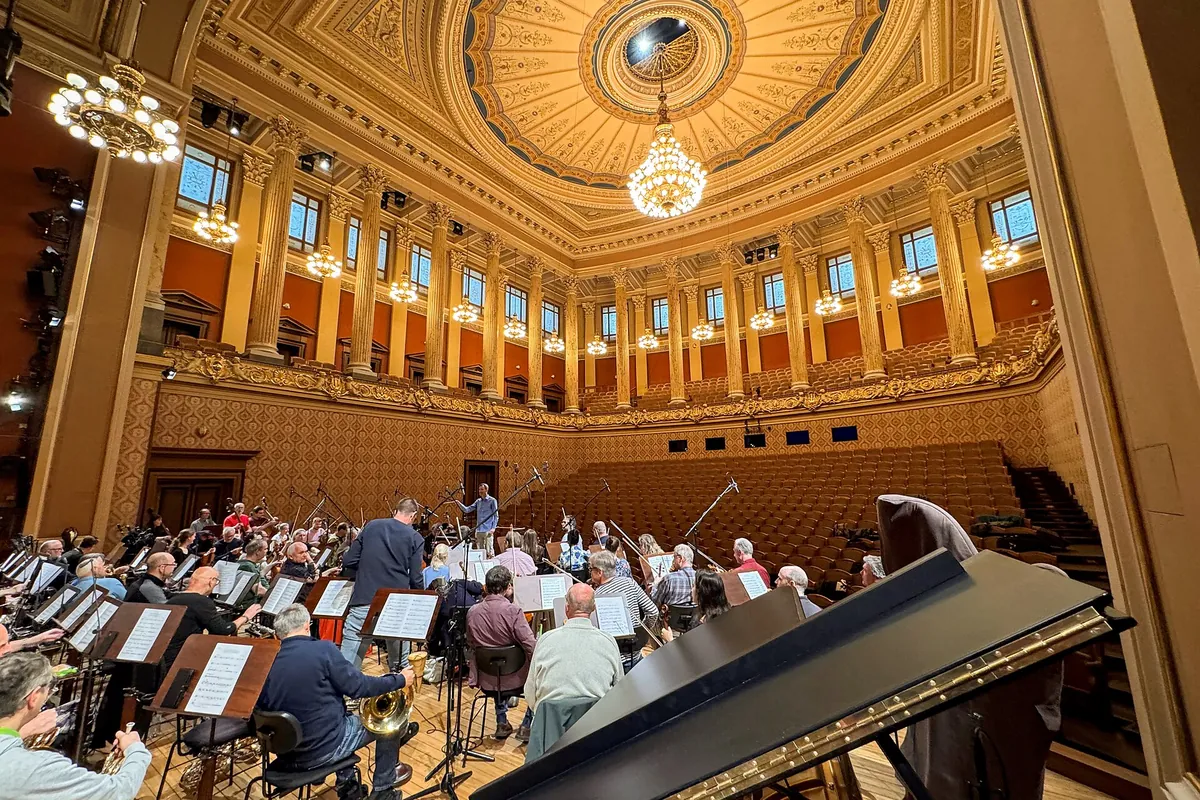
A set of concertos for solo violin and strings suits a room of the Rudolfinum's size, since the sound is clear and does not need a huge orchestra. Dvořák Hall is noted for excellent acoustics, according to Wikipedia, which helps when the writing depends on detail such as bird calls and a barking dog. The page does not tell you which ensemble plays, so the experience will depend on the players, but the music itself is well matched to the room.
Frequently asked questions
Will the concert include the whole Four Seasons?
The page names it but publishes no running order. Check the option for your date.
What is the running time of the complete set?
Wikipedia gives roughly 40 to 43 minutes for the complete set.
Who wrote the poems?
Nobody knows for certain; Wikipedia says Vivaldi may have written them himself.
When did it first appear in print?
Wikipedia says it was printed in Amsterdam in 1725 inside a twelve-concerto set, Il cimento dell'armonia e dell'inventione.
Sources