Start here
Is a Rudolfinum concert in Prague worth it? A 4.6 from 54 guests, weighed
A 65-minute programme of Vivaldi, Beethoven, Mozart and Bach by Czech musicians, weighed on what the booking page states: the room, the music, the players and who might prefer another evening.
Reserve my seat ↗Quick answer
Yes, if you want a classical concert in a historic hall and nothing more elaborate. GetYourGuide rates it 4.6 across 54 reviews for a 65-minute programme by top Czech musicians, with Vivaldi's Four Seasons, Beethoven, Mozart and Bach named on the page, in the Rudolfinum, the neo-Renaissance concert house beside the Vltava. Cancellation is free and payment can wait. What the page does not list is a talk, a meal or a named orchestra, so the value rests on the music and the room. If a plain, well-played hour in a famous hall sounds right, it is a safe booking; if you want a show, look elsewhere.
The Rudolfinum concert at a glance
| Classical Music Concert at Rudolfinum | |
|---|---|
| The music | Classical masterpieces by Vivaldi (Four Seasons), Beethoven, Mozart and Bach, says the page |
| The players | Top Czech musicians; the soloists named on the page change |
| Length | 65 minutes, says the page |
| The place | The Rudolfinum, Alšovo nábřeží 79/12, on the Vltava bank |
| Guest score | 4.6 across 54 reviews on GetYourGuide |
| If plans change | Free cancellation, with payment later |
Verdict first, reasons after
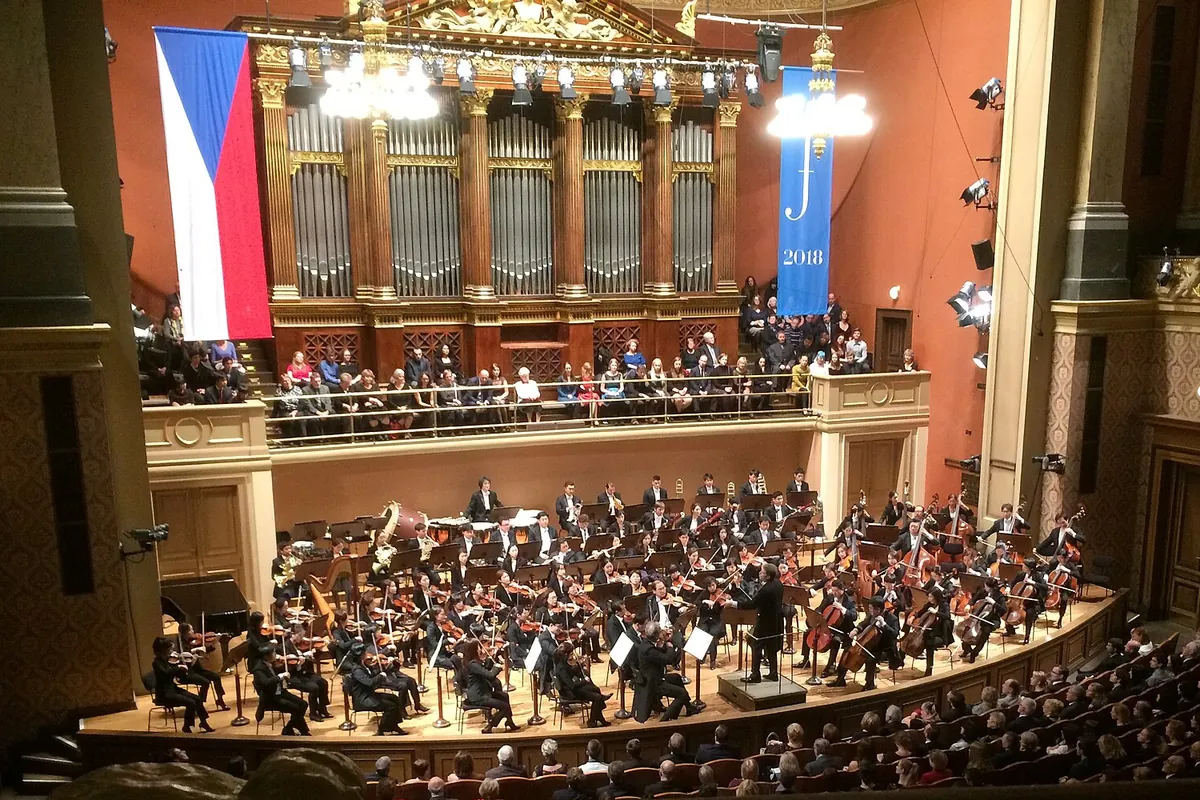
Choose it when the aim is to sit in a celebrated European concert room and hear standard repertoire played by professionals. That answers most of it. Format outweighs stars and price here: a classical concert is a quiet, seated hour, and its pull lies in the sound and the surroundings, with no extras on top. Someone who has never been to a concert hall will find this an easy first, because the names on the page are ones nearly everyone recognises. Someone who goes to concerts every month will weigh it differently, since the page does not say which ensemble plays or which pieces will be chosen. Judged as an accessible hour of familiar music in a landmark building, it earns its place on a Prague itinerary. Judged as a major musical event, it does not claim to be one, and you should not expect it to be.
What the page promises
The product is a ticket for a concert at the Rudolfinum, which the page gives as Alšovo nábřeží 79/12. It lists classical masterpieces by Vivaldi, Beethoven, Mozart and Bach, calls out The Four Seasons by name, and says the musicians are top Czech performers whose soloists change over time. The running time is 65 minutes. You can cancel at no charge and pay once the date is nearer. The page publishes no running order, names no orchestra, mentions no interval, offers no commentary and lists no food or drink. A guide that filled those gaps with guesses would be doing the reader no favours, so this one does not. When the page is silent, the confirmation message you receive after booking is the document to trust.
What the room adds
The Rudolfinum is not an anonymous hall. Wikipedia describes it as a neo-Renaissance building on Jan Palach Square, on the bank of the Vltava, associated with music and art since it opened in 1885. Its largest auditorium, Dvořák Hall, is called one of the oldest concert halls in Europe and is noted for excellent acoustics. The same article records that Antonín Dvořák conducted the Czech Philharmonic there on 4 January 1896. The Czech Philharmonic has been based in the building since 1946, and the Prague Spring festival, which began that year, uses it as a main venue. None of that is promised by the ticket, and the page does not say which room your date falls in, but it explains why a concert here is more than an hour of music. You are sitting where much of the city's concert life has happened for well over a century.
Reading a programme of four composers
The four names on the page span roughly a century and a half of music. Vivaldi's Four Seasons, Wikipedia explains, is a group of four violin concertos written between roughly 1718 and 1723 and first printed in Amsterdam in 1725, and it is often cited as an early, richly detailed case of program music, with sonnets that the music follows line by line. Mozart has a particular tie to Prague, which loved his operas and where his Symphony No. 38 first sounded, and the Mozart guide on this site explains the connection. Beethoven and Bach need no introduction, but the page does not say which of their works you will hear, so this guide does not guess. The practical point is that a mixed programme like this rewards listening for contrast: the bright clarity of Vivaldi, the formal poise of Mozart, the weight of Bach and Beethoven. Read the option on the calendar for your date to see which pieces are offered.
What to expect from the players
The page calls the performers top Czech musicians and says the soloists it names change. It does not name an orchestra or a conductor. That matters because the Czech Philharmonic, the resident orchestra of the building, plays its own season there, and anyone hoping to hear it should read that orchestra's own schedule. The concert on this page is a different booking, and the page makes no claim to the contrary. The page calls the performers top Czech musicians, but a description is not a programme note, and the fairest summary is that you will hear professional players in a good room. Reviewers on the booking page give it 4.6 across 54 reviews, a high score from a modest number of people. That is encouraging, but a score from fifty-odd guests is a thinner signal than a score from several thousand, and the comparison guide returns to the point.
Choosing your date
Open the calendar, pick the date that suits your trip, and read the option attached to it before you pay. Works and soloists may change between dates, and only the calendar reveals which. With cancellation free and payment deferred, holding a seat while you finish the rest of your itinerary risks very little. Check the terms shown for your date when you book, since those are the ones that apply. Leave room around the concert: it lasts about an hour, so it fits comfortably into an evening with a meal before or after, and the confirmation message will tell you when to arrive and where to enter.
Who should skip it
Look elsewhere if spoken explanation matters to you, since the page lists no commentary, or if you expect a meal and a drink, since none are listed. Skip it if you have your heart set on one named orchestra or soloist, because the page names neither. Small children who struggle to sit quietly for an hour will find it long, and anyone wanting a full Czech Philharmonic evening needs that orchestra's own season, which runs longer and plays something else. If any of this sounds like you, spend the money on something that fits.
How it fits a Prague visit
The Rudolfinum sits by the river in the Old Town, near Charles University's Faculty of Arts, and Wikipedia notes that the Mánes Bridge beside the square gives good views of Prague Castle, Petřín Hill and Charles Bridge. That makes the concert easy to combine with a daytime walk. The river cruise to the Devil's Channel shown on this page is the natural companion if you want something on the water, and the comparison guide explains how to choose between the two. A concert ticket suits one evening; it does not need a day built around it.
Frequently asked questions
Is the concert suitable for beginners?
Yes. The composers named on the page are among the best known in classical music, so a first-time listener will recognise the names, if not every piece.
Will I hear the whole of The Four Seasons?
The page names it but publishes no running order. Wikipedia puts a complete performance at about 40 to 43 minutes, so look at the option on your date.
Is a smart outfit required?
The page states no dress code. Many concertgoers dress smart-casual for a historic hall.
Where do I get the details for the door?
In your confirmation message, which carries the entry details and repeats your date.
Sources